Heartbits

My role

My role

My role focused on concept development, research, and interface design. I worked from early research and concept exploration through to designing the key gameplay interfaces.

My role

My role focused on concept development, research, and interface design. I worked from early research and concept exploration through to designing the key gameplay interfaces.

Timeline

Timeline

Sep '25

Sep '25

Awards

Awards

IDA, INDIGO, SCAD IX

IDA, INDIGO, SCAD IX

Team

Team

3 Designers, 3 Technologists

3 Designers, 3 Technologists

Timeline

Sep '25

Awards

IDA, INDIGO, SCAD IX

Team

3 Designers, 3 Technologists

Timeline

Sep '25

Awards

IDA, INDIGO, SCAD IX

Team

3 Designers, 3 Technologists

Rebalancing family roles through cooperative play.

Rebalancing family roles through cooperative play.

The mission

The mission

Supporting parents through a safer and more connected recovery journey.

Heartbits was developed during a 48-hour SCAD IX hackathon in collaboration with Johnson & Johnson and Unity. Given the challenge of supporting middle-aged parents through rotator cuff recovery, our team explored what makes staying on track with recovery difficult in everyday life.

Heartbits was developed during a 48-hour SCAD IX hackathon in collaboration with Johnson & Johnson and Unity. Given the challenge of supporting middle-aged parents through rotator cuff recovery, our team explored what makes staying on track with recovery difficult in everyday life.

Project outcomes

Project outcomes

3 Design Recognitions

76% Increase

IDA Honorable Mention

INDIGO Silver Winner

SCAD IX Honorable Mention

3 Design Recognitions

IDA Honorable Mention

INDIGO Silver Winner

SCAD IX Honorable Mention

1 Working prototype

1 Working prototype

Integrated flex sensors, camera-based motion tracking, and rehabilitation protocols.


1 Working prototype

Integrated flex sensors, camera-based motion tracking, and rehabilitation protocols.

Within 48 hours, we turned our concept into a working prototype and received special recognition from Johnson & Johnson and Unity for its future potential.

Within 48 hours, we turned our concept into a working prototype and received special recognition from Johnson & Johnson and Unity for its future potential.

Heartbits At a Glance

Heartbits At a Glance

Heartbits turns recovery into a cooperative game, allowing injured parents and their families to move through the journey together.

We embedded recovery protocols into the gameplay, guiding safer movement while allowing family members to play an active role throughout the journey.

We embedded recovery protocols into the gameplay, guiding safer movement while allowing family members to play an active role throughout the journey.

CONCEPT 01

Make family part of the recovery system

Make family part of the recovery system

Make family part of the recovery system

Instead of designing another solo rehabilitation tool, we made recovery cooperative.

Instead of designing another solo rehabilitation tool, we made recovery cooperative.

Instead of designing another solo rehabilitation tool, we made recovery cooperative.

CONCEPT 02

CONCEPT 02

Build recovery stages into gameplay

Build recovery stages into gameplay

Build recovery stages into gameplay

Each stage unlocks movements based on clinical recovery progress.

Each stage unlocks movements based on clinical recovery progress.

Each stage unlocks movements based on clinical recovery progress.

CONCEPT 03

CONCEPT 03

Turn caregiving into participation

Turn caregiving into participation

Turn caregiving into participation

Parents stay involved, while children better understand the recovery journey.

Parents stay involved, while children better understand the recovery journey.

Parents stay involved, while children better understand the recovery journey.

how we got there

how we got there

The problem wasn't awareness. It was everyday life.

We first looked into the recovery process to understand why injured parents struggled to follow it. Through secondary research and conversations with patients, we found that the challenge wasn't the clinical guidance itself. It was the pressure of balancing multiple roles—as workers, partners, and parents—that often pushed them to use the injured arm too early.

CLINICAL REQUIREMENT

Protect the shoulder / limit active movement

REAL-WORLD PRESSURE

Parenting & caregiving responsibilities continue

BEHAVIORAL RESPONSE

Patients resume movement prematurely

Recovery doesn’t pause caregiving responsibilities, and even when parents understand the restrictions, emotional and family pressures can still lead them to use the injured arm too early.

Recovery doesn’t pause caregiving responsibilities, and even when parents understand the restrictions, emotional and family pressures can still lead them to use the injured arm too early.

Recovery doesn’t pause caregiving responsibilities, and even when parents understand the restrictions, emotional and family pressures can still lead them to use the injured arm too early.

Translating insight into the system

Translating insight into the system

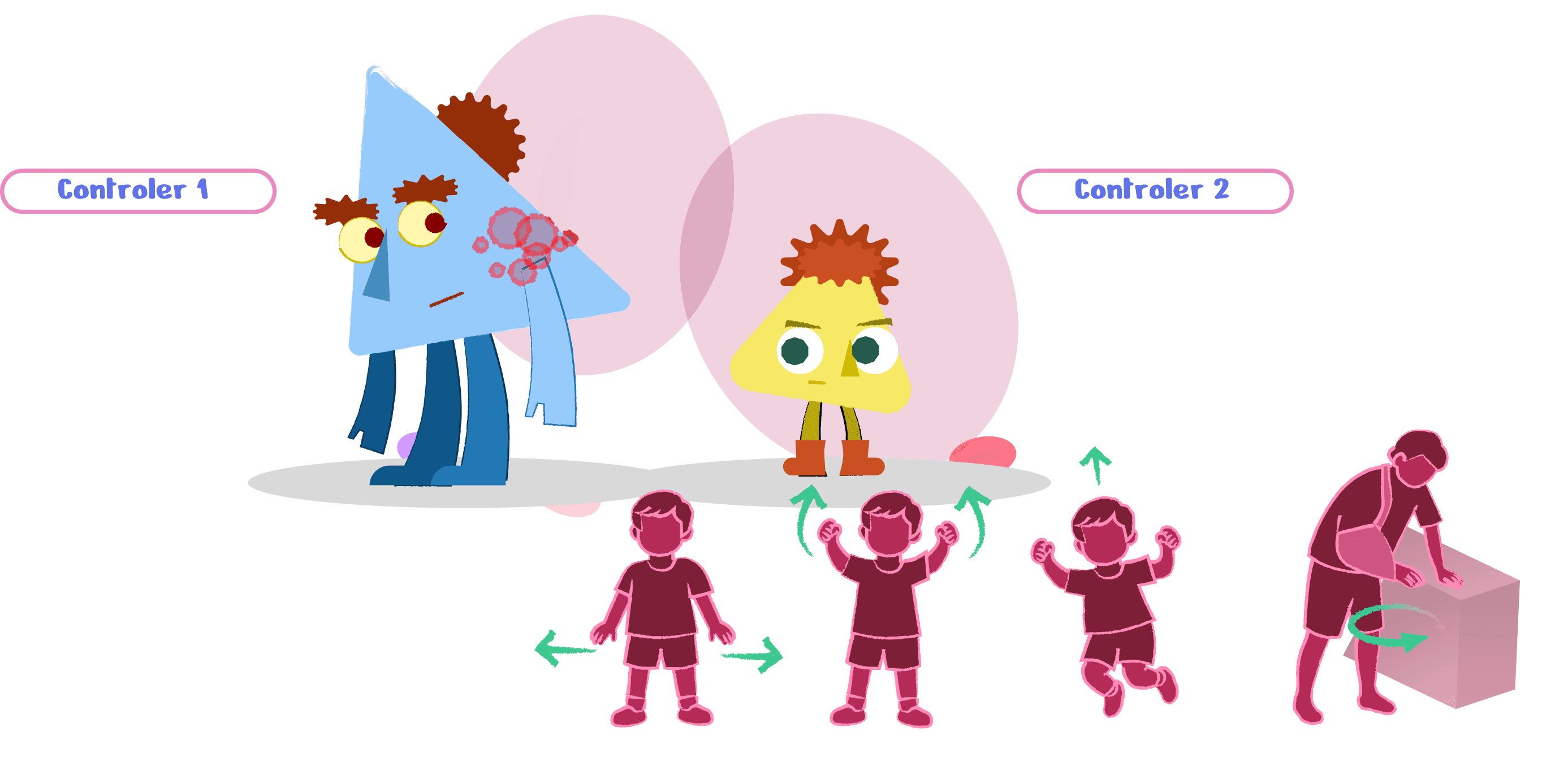
We connected movement detection, gameplay, and interface into one system.

01. Detecting movement

We developed a layered glove system to capture real-time hand movements and translate them into in-game actions.

02. How the system works

Flex sensors and camera detection work together to support different forms of interaction throughout the game.

03. The game experience

The game follows different stages of post-surgery recovery, with each stage introducing different movements and gameplay based on clinical guidance.

More game interfaces I designed.

Reflection

Reflection

Build early. Learn faster.

This was my first hackathon, and those 48 hours pushed me out of my habit of over-designing. I learned to design and build at the same time, see problems in real time, and adjust quickly along the way. I loved working on a challenge where design could make an everyday experience a little better, and seeing our idea come to life made the whole experience especially meaningful.

This was my first hackathon, and those 48 hours pushed me out of my habit of over-designing. I learned to design and build at the same time, see problems in real time, and adjust quickly along the way. I loved working on a challenge where design could make an everyday experience a little better, and seeing our idea come to life made the whole experience especially meaningful.